U.S. Tariff Increase Peril Global Economic Recovery
 Linkedin
 Google +
The WTO has cut down the expected growth rate of global trade from 3.7 percent to 2.6 percent.
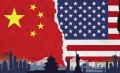
In 2017, the global economy ushered in its first full recovery in 10 years. From the United States to Europe, from Russia to Latin America, the universal economic build-up boosted market confidence. The good times did not sustain for long. Since 2018, the Trump Administration has raised tariffs on several occasions with the excuse of protecting domestic market. From Sections 201 and 232, which are abused on the ground of national security, to frequent uses of anti-dumping and anti-subsidy measures, to Section 301, the U.S. repeatedly broke its commitments and the World Trade Organization (WTO) rules. It seems that tariffs have become a magic wand wantonly wielded by the Trump Administration, which is seeking to transform the existing global economic and trade order.
However, as revealed in the White Paper on China’s Position on the China-U.S. Economic and Trade Consultations issued on June 2, tariffs have led to a five-month decline in China’s exports to the United States, and reduced U.S. exports to China for eight consecutive months. Uncertainty in tariff measures has also resulted in a wait-and-see attitude toward investment cooperation between enterprises of the two countries. The WTO has cut down the expected growth rate of global trade from 3.7 percent to 2.6 percent.
Reducing Tariffs in line with the Law of Global Economic Development
It is acknowledged that international trade not only originates from differences in resource endowment, industrial structures, economic development stages, and market demands of diverse economies. It is also influenced by international economic and trade rules and technological progress. During a prolonged time span prior to the promulgation of the General Agreement on Tariffs and Trade (GATT), the predecessor of the WTO, international trade was restricted by high tariff barriers. Enterprises and consumers worldwide could only allocate resources in a relatively limited scope. One of the most prominent features of the GATT is that the participants have dramatically reduced tariffs on imports of commodities from other members, thus vigorously propelling trade activities.
The decrease in tariffs not only helped the developed economies of Europe and the U.S. in the 1950s and 1960s to export large quantities of their globally competitive manufactured goods, but also spurred a new wave of global distribution of multinational corporations in the 1970s.
Since the dawning of the 21st century, the number of WTO members has swelled rapidly, the scale effect of tariff reduction has become more evident, and the transnational industrial chain has been constantly adjusted and optimized to boost employment and increase tax revenue for all participants and drive consistent economic growth. The increasingly interlocked transnational economic and trade bonds, in turn, helped to motivate the sustained reduction of transnational tariffs. Tariff reduction is essentially a process of market integration among countries, which is also a critical move to diminish the government’s “visible hand” intervention in accordance with Western market-based economics theory. It is conducive to more efficient allocation of resources, the reduction of production and transaction costs, and the generation of greater welfare for consumers.
U.S. Tariff Increases Failing to Achieve Targets
In fact, the policy of slapping tariffs, implemented repeatedly by the U.S. administrative organ in history, without exception failed to achieve optimum results. In order to restrain imported goods from threatening domestic ones, the U.S. Administration adopted the Smoot-Hawley Tariff Act in 1930, which dramatically enhanced import tariffs, thus provoking widespread retaliation from major trading partners. Consequently, the U.S. economy did not recover from the Great Depression, but more intense conflicts in the global arena were kindled.
In the second half of the 20th century, the U.S. intimidated the East Asian economies including Japan and South Korea through anti-dumping and anti-subsidy trade protectionist moves. Despite drastic adjustments made by Japan and South Korea under the pressure mounted by the U.S., traditional manufacturing industries such as textiles and steel did not return to the U.S. While Japan and South Korea were afflicted by tariffs, the U.S. failed to realize its original intentions. Instead, global economic development and technological innovation were severely hindered.
Western economics theory holds that competition is a prerequisite to development, and lack of competition will result in low efficiency. Tariff measures are akin to boiling a frog; progressively heated water does not alert the frog, and the frog is incapable to escape when the water temperature is too high. The U.S. steel companies, protected by tariffs, lack the initiative to innovate and the will to improve technology, efficiency and competitiveness through research and development. Therefore, even high tariffs could not prevent the competitive edge of the U.S. steel enterprises being eclipsed by competitors in India, Brazil and China.
The WTO has created the largest tariff reduction platform around the globe, and members manage the commodity exports of other member countries according to the most-favored-nation treatment principle. Most countries, including the U.S., have set higher protective tariffs on imports of certain sensitive commodities like agricultural products, but in the general field of industrial products, tariffs in major economies with larger volumes of trade are very low.
As economic interaction is highly globalized, the global division of labor among industries, including manufacturing, becomes common. Low tariffs will not increase the cost of multiple imports and exports in the production and assembly of products. Automakers in the U.S., Canada and Mexico, as well as Airbus and other manufacturing industries in the European Union (EU) have also opted for the mode of transnational distributed collaboration. Excluding WTO members like China, EU and Mexico from the most-favored-nation-treatment principle violates the commitment of the U.S. to the multilateral system and undermines basic rules of the WTO. The negative impact will be long lasting.
The cost of customs supervision is also an important cause for tariff reduction. The United States-Mexico-Canada Agreement determined the value of import and export commodities with the lowest levied tariff. In the process of tariff collection, the cost of classification and inspection is high. If the value of goods is low, the tariff collection becomes uneconomical. In fact, the WTO Trade Facilitation Agreement was adopted because of the common demands of members for implementing trade facilitation measures to reduce the cost of international trade. It has also demonstrated that tariff cut and removing trade barriers accord with broad interests.
Opportunities for EU and other Trading Partners of China
As agreed by international organizations, such as the WTO, International Monetary Fund and the Organization for Economic Cooperation and Development, the global economic recovery has not yet entered a stable period. The economic development of China and the U.S. and bilateral trade activities are of significance to sustainable growth of the global economy. In the preface of the White Paper on China’s Position on the China-US Economic and Trade Consultations, China stressed that the China-U.S. commercial relationship serves as both the ballast and the propeller of the overall bilateral relationship. At stake are the fundamental interests of the two peoples, and the prosperity and stability of the world, it said.
In recent years, China has accelerated the process of opening its market to the outside world. Import tariffs on the commodities for countries and regions included in free trade agreements have been greatly reduced. The reduction of import tariffs on commodities, including cars and automobile parts, has benefited all WTO members. The development and upgrading of China’s consumer market will further generate huge and sustainable import demands, which can provide important trade and investment opportunities for enterprises worldwide, including those from the U.S. Consumer demand is, to a large extent, determined by consumer habits. If the presence of U.S. goods in the Chinese market is weakened due to tariffs, consumers are likely to opt for other suppliers. In this sense, maintaining high U.S. tariffs on China’s goods may provide more opportunities for trading partners like those from Europe to increase export to China.
Zhou Mi, deputy director of the Institute of American and Oceania Studies of the Chinese Academy of International Trade and Economic Cooperation under the Ministry of Commerce