Frederick du Plessis: Pandemic Becomes the Catalyst for New Thinking about Smart Cities
 Linkedin
 Google +
COVID-19 is an element, a catalyst for the acceleration of the construction of smarter cities.
Editor’s Note:?The pandemic of Covid-19 has brought impact on many cities. New technologies are expected to help control the spread of epidemic as well as build smart cities. What is the future vision for smart cities in China and other countries along the Belt and Road? David Gosset, the founder of Europe-China Forum, discussed with Frederick?du Plessis, a Dubai-based business leader and international strategist?on the topic in the serial interview of A Time of Resilience.
A Time of Resilience, hosted by Mr. Gosset, is a high-level dialogue with international veteran diplomats, business elites and outstanding scholars. The serial interviews are presented by China Focus in association with DG2CI Limited.
David Gosset: In late May, China just had a very important political event, the Two Sessions. China’s State Councilor and Foreign Minister Wang Yi spoke about Chinese diplomacy, the position of China in the post COVID-19 world. What was very striking is the fact that he?said that we live in a world which is multipolar, not made only of China and the West. I wanted to ask you, how do you see the relations between the Gulf Cooperation Council (or the GCC made of Bahrain, Kuwait, Oman, Qatar, Saudi Arabia and the United Arab Emirates) and China?
Frederick?du Plessis: Yes,?I?like the notion of a multipolar world in a global context. And this means that we do have collaboration between large regions or even between smaller regions. And I think the collaboration between China and the GCC, and especially countries like the United Arab Emirates and Saudi Arabia?where probably the largest percentage of the trade happens between China and the GCC,?these are two very important trade partners, because China is a country that needs to import energy, but it is also being the manufacturing hub of the world.
So, if we look at the construction industry in this region, you’ll find that many Chinese corporations are involved. At the same time, I think there is very beneficial foreign direct investment exchange. So, we are seeing increasingly investments in China from the Middle East and we are also constantly seeing investments from China here in the Middle East. So, I think this is a great handshake. These two regions need each other and they work together for the greater benefits of both their regions.
David Gosset: When one thinks about the Middle East and the GCC in particular, people think about energy and oil. But being in one of the seven emirates of the United Arab Emirates (UAE), in Dubai?more exactly, you would know very well that the GCC?is also about smart cities. And we know that you are an expert in that field. But how do you see the connection between the COVID-19 and smart cities? Maybe this global health crisis tells us about the necessity to accelerate the construction of smarter cities.
Frederick du Plessis: Yes, in October last year, we talked about smart cities?in the context of the Greater Bay Area?in China. We see?that the notion?of?smart city develops around what we call the megacity concept. And megacity is really?about?cities that have around 10 million people. Dubai?with its 4 million inhabitants?is not quite a mega city. It might get there in the future, but it already believes in the notion of a smart city. So in these cities, these large cities, you have many challenges such as crime, inequality, health care, how do you manage the infrastructure, how?do?you govern the city, and how do you take care of all the resources. And so what we are seeing in smart cities, governments working together with the private sector, together with the infrastructure providers, with health care, with energy companies, with waste management companies, with?the citizens of those cities to come to a way of making it much more convenient for the population of those cities. And we know that the world’s population is growing?rapidly. As a result, we’ve also seen that more and more people are migrating to cities – this is the process of urbanization. And you see more and more of these megacities in the emerging world.
China is?a?great example, and there has been this wave of migration into the cities. And how do you make these cities manageable? How do you make it convenient for the people living there and convenient for the authorities to manage? So now we get COVID-19. Basically, what we’ve seen is the need, because of the large concentration of people in cities, to try to make those cities safe. And having a smart city enables that.
In a smart city, your authorities have information, and they can quickly disseminate that information to population. At the same time, the population is integrated with that data, with that?information. So, they are providing information back and data back to the city authorities. This is a very synergistic and helpful environment to have. Now, of course there will always be security questions, and that has to be looked at carefully, because we have to respect, acknowledge and maintain the privacy of people. But when people begin to see that cities are well organized and they have access to data in an anonymous way, that can be helpful to them in preserving their health. And we see some very good studies done by, for example, the University of Newcastle on public movements in a city and understanding the infection rate of COVID-19. And when you change the public movement, will it have an effect or not? And so,?I think as we go forward, COVID-19 could become the catalyst for new thinking about health care and public movements and safety in cities.
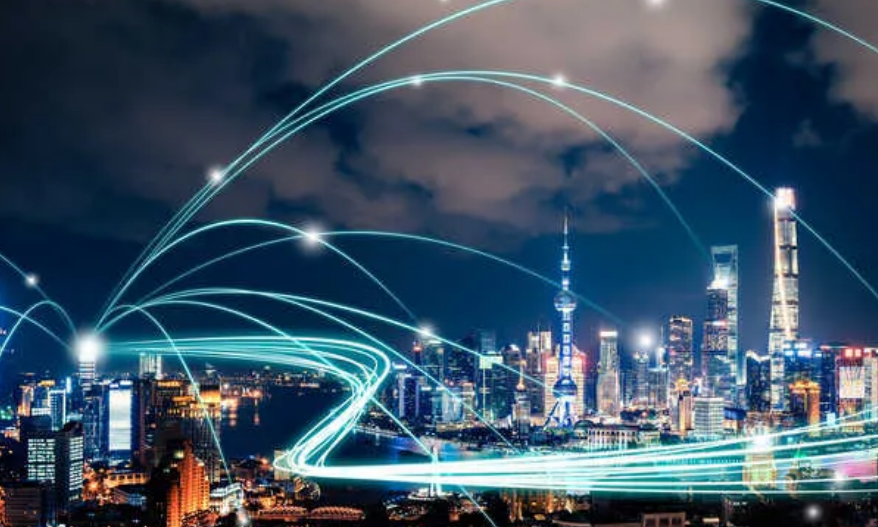
David?Gosset: We converge to think about COVID-19 as an accelerator for the construction of smarter cities in which we feel safe, also from a public health perspective. Because the smart city is about technology, but also the quality of life. We were discussing about China’s diplomacy, how China sees itself in the world.?Chinese Foreign Minister Wang Yi spoke a lot about the necessity to build a community of shared future for mankind. This is a very important vision proposed by Chinese President Xi Jinping. China since 2013 has been working with many other countries to build the Belt and Road, meaning more connectivity through the Eurasian continent, but also between Asia and Africa through the Indian Ocean. Some people call the Belt and Road as a vision for new silk roads. But don’t you think also we can think about these new silk roads as continuity between smart cities that we have in China, in Asia, in the Middle East, in Europe, and in Africa?
Frederick du Plessis: Yes, David, this is a really exciting question and topic. Because if we think about international clustering and how clustering works, and I spent a big portion of my career looking at most notably the chemical industry clusters around the world, humans don’t exist on their own. They need to co-exist with others. And in this way, we need to collaborate. And we talked about multipolar and we talked about collaboration along the way. Now if we think about the Bay Area, for example, in San Francisco area, the coexistence of several cities with different hot spots of activity, whether those be technological, whether they be academical, whether they be scientific, or whether they be in the digital age, those we see have contributed to the success of that. We see the same in the south of China around Guangdong Province?with the Greater Bay Area. If we look at Hong Kong, Macao, Shenzhen, Zhuhai, we see again, a very, very strong opportunity to build a collaborative set of smart cities where there could be shared information across these cities to improve efficiency, the effectiveness and the quality, as you’ve mentioned and emphasized a few times, the quality of life. I was just thinking when you asked me this question about how about we just unraveling this cluster into a belt, into a long road. And then do we think about roads having two end points, maybe starting in Shanghai, and we could end up, say in Africa, in Ethiopia’s capital Addis Ababa. But along the way, we need to get people interested in why should they participate in this initiative. And one real way that we can do this is by understanding the collaborative opportunities and understanding the deficiencies in the different cities. No city is complete on its own. So if you could indeed connect in this, let’s call it, “belt-road-type cluster”, an ecosystem of cities with different strengths with different weaknesses, and they learn to collaborate with each other along the road. And they don’t need to only think about the end points because this becomes their survival mechanism, this becomes their way of becoming in fact more resilient in the future because they actually have the support of all their partner smart cities along the road. Now if we can digitalize all that, think about all those different information systems that work in a smart city and interconnect those. I think this is a very visionary concept, it could be really powerful.
David Gosset: What is fascinating in your presentation of the issues is the notion of collaboration. When we face such a global crisis, it should bring us?closer?together. It should be a catalyst for more international collaboration. But unfortunately, at the moment, we see not only some forces joining for more collaboration, but we see also some divisive?forces. How do you reconcile these two forces and how can we make sure that we stay on the path of increasing global cooperation serving mankind?
Frederick du Plessis: This is,?as some people would say in the 1960s, a million-dollar question, but?it’s truly an important question. And I think and I’m hopeful, I believe in the resilience of humankind, and we have this bounce back ability while we might hear populist leaders talk about polarization and thinking about trade wars or thinking about economic warfare, I actually think the future is not anti-global. I do agree that the world is becoming multipolar, but that doesn’t stop collaboration, and human beings?are not complete on their own. We were fundamentally born with a need to collaborate. And I think this becomes a policy challenge. It becomes a strategy challenge to governments, to authorities. And if we can sketch a vision where we say what is it in it for our partners along the silk road, what will we be able to offer them by bringing a digital solution and Internet of Things solution in improved healthcare, improved living conditions for their population? This might be the way forward to sketch a vision which invites people to think in a collaborative way rather than in a competitive or combative way.
David Gosset: Exactly. I think messages you presented are very important. We live in a world which is not only about China and the West, and the United States of America. Second, and I think this is very important, COVID-19 is an element, a catalyst for the acceleration of the construction of smarter cities. Third, it leads us to the idea of a new silk road along which we would have smarter cities, smart cities. Your vision is more about evolution and a progressive evolution.
Frederick du Plessis: Yes, I think that description summarizes where we should be, progressive evolution, and not polarization, not new normal. We are continuing?to evolve as a human race. We can only continue to evolve as human race in a collaborative way.
David Gosset: Exactly. Thank you so much.