U.S. Chip Export Restrictions Against China Likely to Backfire
 Facebook
 Twitter
 Linkedin
 Google +
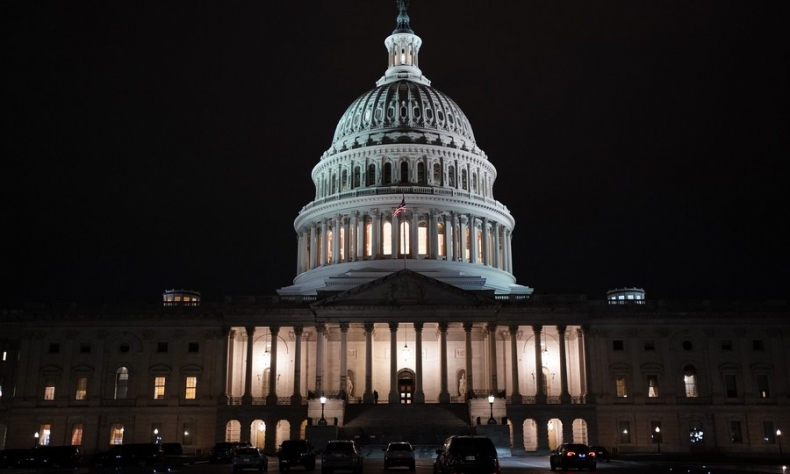
The fact that the Joe Biden administration is stepping up efforts to stop America-made chips and chipmaking equipment from going to China is dampening demand for American products in the world’s biggest semiconductor market.
The United States’ largest chipmaker Nvidia is back exporting to China’s mainland. It is able to do so only after creating a chip that complies with new export rules imposed by the U.S. authorities. The rules aim to keep cutting-edge technology out of Chinese hands, but have the potential to cost U.S. chipmakers billions if they fail to follow Nvidia’s lead.
Under the rules, issued on October 7, the U.S. has significantly expanded restrictions on the supply of chips and chipmaking equipment to China, while also pushing its allies to do the same.
The U.S. Department of Commerce’s Bureau of Industry and Security (BIS) established new categories of export controls, aiming, it said, to “restrict China’s ability to obtain advanced computing chips, develop and maintain supercomputers and manufacture advanced semiconductors used in military applications.”
The U.S. authorities added 31 new Chinese entities to the Unverified List, a list containing foreign entities whose bona fides the BIS has been unable to verify through end-use checks. U.S. companies must make applications to the U.S. Department of Commerce in order to export to these entities but, if the entities do not become verified within the first 60 days, U.S. companies must apply for a full license in order to supply them with products.
Prior to the addition of the 31, nine Chinese entities had been verified and removed from the list. In response to the move, a spokesperson from China’s Ministry of Commerce said it showed the two countries are capable of finding solutions that benefit both sides, adding the new export controls will severely hurt regular trade between companies in the two countries and threaten the stability of global industrial and supply chains.
How we got here
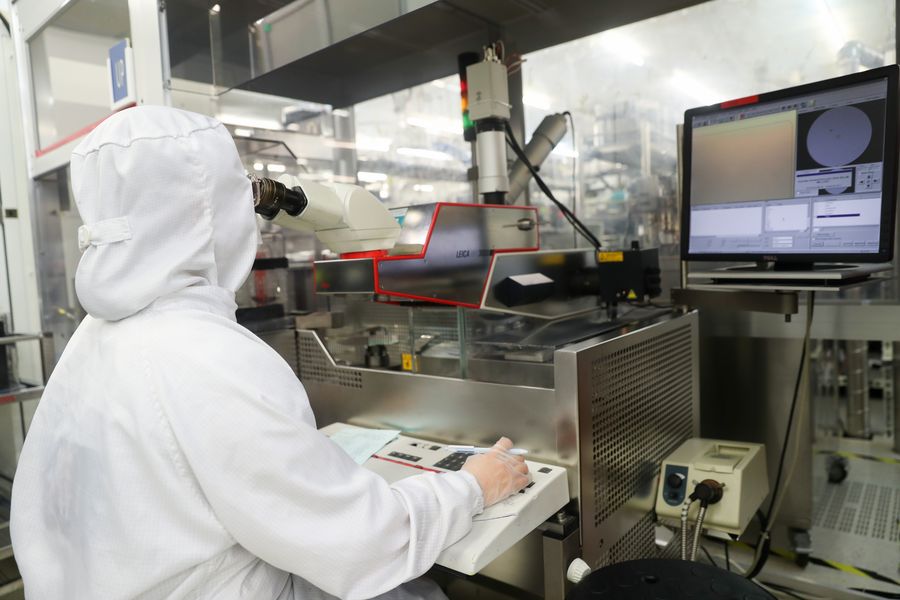
Over the past four years, the U.S. Government has been tightening controls on the export of semiconductors to China, adding layers onto restrictions and expanding the scope of companies covered.
The measures began with the banning of direct sales of U.S. chips and other components to Chinese tech firms, firstly ZTE and then Huawei. These two tech firms were added to the U.S. Commerce Department’s Entity List, which prohibits companies from buying controlled U.S. exports without a license, thus rendering them unable to access products containing more than 25 percent U.S. technology. The ban proved ineffective as Huawei had alternative sources in China’s Taiwan and the Republic of Korea (ROK).
In May 2020, the BIS made Huawei subject to the Foreign Direct Product Rule (FDP Rule) to restrict the company from acquiring any controlled U.S. technology and software, meaning the 25-percent cap was reduced to zero. This effectively allowed the U.S. Government to force the rest of the world to comply with its own export controls on the Chinese tech giant. Many more Chinese companies were then put on the Entity List, though the BIS did not apply the FDP Rule to all of them.
“The recently introduced export controls are different,” Yang Shuiqing, a research fellow with the Institute of American Studies under the Chinese Academy of Social Sciences, told Beijing Review. “The BIS expanded the scope and substance of the restriction, applying the FDP Rule, formerly exclusively to Huawei, to 28 more Chinese entities and, by extension, to the advanced computing and supercomputer industries in the U.S. The country has implemented the extensive ban in an attempt to prevent China’s indigenous semiconductor industry from progressing.”
“The dense regulatory filing gave the strongest hint yet of U.S. intentions. The controls, more so than any earlier U.S. action, reveal a single-minded?focus on thwarting Chinese capabilities to indigenize the supply chain,” Jon Bateman, a senior fellow in the Technology and International Affairs Program at the Carnegie Endowment for International Peace, said in an article published on Foreign Policy on October 12. “To justify this dramatic escalation, the BIS makes the same old national security arguments. Yet the agency never really deals with the fact that denying them to China is effectively a form of economic containment.”
Will the U.S. hold out?
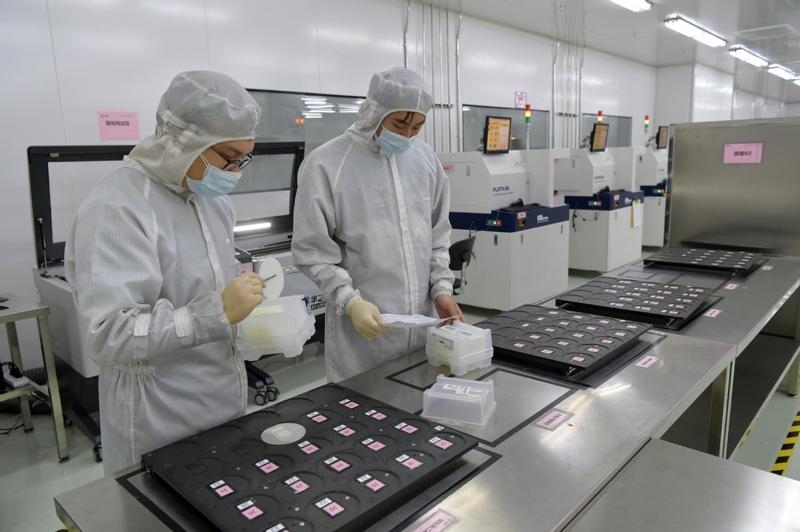
The fact that the Joe Biden administration is stepping up efforts to stop America-made chips and chipmaking equipment from going to China is dampening demand for American products in the world’s biggest semiconductor market.
According to a 2020 study by Boston Consulting Group, it was estimated U.S. companies could lose up to 18 percentage points of global share and 37 percent of their revenue if the U.S. completely banned semiconductor companies from selling to Chinese customers.
This year, more than $1.5 trillion has been wiped from the combined market value of U.S.-listed chip businesses, a piece in The Economist read in late October.
Micron Technology Inc. reported a 20-percent year-on-year fall in its fiscal 2022 quarterly results, released on September 29.
Nvidia warned in August that the new restrictions would cost the firm as much as $400 million in sales, further stating that of its $26.9-billion revenue in the last fiscal year, around a quarter came from China.
The new regulation placed on China-bound chips restricts their interconnectivity bandwidth, their capacity for exchanging information with other chips in a system, to below 600 gigabytes per second (GB/s). The company said its new chip for China, the A800, has the same internal performance as the A100 it replaces, but its interconnectivity bandwidth has been reduced to 400 GB/s.

U.S. allies may not be happy, either. Currently, the U.S., Japan, the ROK, and China’s Taiwan together account for 92 percent of the world’s semiconductor output by value and the U.S. expects the four to team up into what has become known as the Chip-4 alliance. The alliance aims to build a unified supply chain that cooperates on the design and manufacturing of advanced semiconductors and freezes out China’s mainland.
“The ROK has been reluctant to join the alliance. It sells 60 percent of its semiconductor products to China’s mainland. Despite its joining talks to discuss the formation of the alliance, the ROK may show disregard for U.S. calls,” Yang said.
“Joining?the Chip-4 alliance is a significant risk for [the ROK] as any moves to restrict chip sales to and investment into China risks triggering a trade war—with China boycotting [the ROK’s] goods, regardless of sector,” Matthew Bey, a senior global analyst at RANE Risk Intelligence, a geopolitical business consultancy, said to EurAsian Times.
“I think there’s definitely a sense of disappointment [from the U.S.] that allies were not on board with this rule when it rolled out,” Jimmy Goodrich, Vice President of Global Policy for the Semiconductor Industry Association, said in an online discussion hosted by the Washington International Trade Association.
“That doesn’t help the U.S. Government achieve its objective. It harms U.S. industry,” Goodrich added.
Talent, out
“Another thing about the new measures,” Yang said, “is they bar U.S. persons, including U.S. citizens and green card holders, from providing any support for the development or production of chips at semiconductor-manufacturing facilities in China without a license—regardless of whether this support includes the export of any products or technologies. It is the first time U.S. export controls against China have extended to people, rather than just organizations and companies.”

The restriction may force Chinese Americans working in China’s semiconductor firms to choose between their citizenship and their job. At least 43 senior executives are American citizens working at 16 publicly listed Chinese semiconductor companies, according to The Wall Street Journal.
Increasing numbers of Chinese academics are choosing to leave the U.S., citing a more hostile working environment. Over 1,400 Chinese academics gave up their U.S. affiliation in 2021, representing a 22-percent jump from the year before, according to data compiled by Princeton University, Harvard University, and the Massachusetts Institute of Technology (MIT).
In 2018, the Donald Trump administration launched the China Initiative to investigate allegations that U.S.-based scientists were transferring advanced technologies to China. Academics criticized the initiative for chilling scientific cooperation and deterring Chinese academics from moving to or staying in the U.S.
Chen Gang, an MIT professor who had espionage charges against him under the China Initiative dismissed in January, said the program brought “unwarranted fear to the academic community” after the charges against him were dropped a year later.
“You work hard, you have good output, you build a reputation,” Chen said in a three-and-a-half-hour interview with The New York Times at his MIT office. “The government gets what they want, right? But in the end, you’re treated like a spy. That just breaks your heart. It breaks your confidence.”