Lula’s China Visit Steers Sino-Brazil Ties to Greater Heights
 Facebook
 Twitter
 Linkedin
 Google +

Lula’s visit to China gave both countries the opportunity to renew the solidity of the foundation of bilateral relations and the friendship between the two peoples.
Brazilian President Luiz Inacio Lula da Silva paid a four-day visit to China from April 12 to 15 at the invitation of Chinese President Xi Jinping. His visit took place on the heels of a three-day visit to China by French President Emmanuel Macron from April 5 to 7.
Lula’s visit took place at a time when U.S. President Joe Biden has mounted pressure on its allies to reduce ties with the world’s second biggest economy – China and pushed them to “take a side” in the backdrop of the protracted Russia-Ukraine conflict.
It’s encouraging to see that from Macron to Lula, more nations around the world show that they don’t want to be coerced by the U.S. to choose a side towards a dangerous new Cold War. Truly speaking, Lula’s visit has given an opportunity for the two countries of different hemispheres to renew bilateral ties and project positive leadership in the turbulent world.
Actually, in recent months, heads of different countries and heads of multinational corporations have been visiting China one after another as China is having a strong economic rebound. Frequent visits by high-level leaders reflect the international community’s recognition of China and its markets being no longer just an option, but a necessity for boosting their economy in the post-COVID-19 era. Brazil is the largest country in Latin America and a key player of emerging economies as well as a founding member of the BRICS. The Brazil-China cooperation is definitely of great significance to global growth and governance.
Renewing old ties with China
It was Lula’s fourth foreign mission to China and his first visit outside the Americas after his third presidential inauguration on the first day of 2023. China was a major component of Lula’s foreign policy during his previous terms as president from 2003 to 2010. Prior to his tour, President Lula wrote on Twitter that the journey is “to strengthen relations with our biggest trading partner,” noting that “much needs to be done for a better country.” He used his China trip to convey the message that “Brazil is back” as a key player on the global stage.
Lula’s China trip was aimed at mending old ties with China in the current geopolitical situation. Plainly speaking, Brazil’s Workers’ Party leader’s China visit was to reignite bilateral cooperation with the Asian power since the Sino-Brazilian relation deteriorated under the far-right Liberal Party-led Jair Bolsonaro’s administration.

Lula’s fourth visit to China has carried more than symbolic significance for the China-Brazil strategic partnership established in 1993 that upgraded into a comprehensive strategic partnership in 2012. Besides, he was joined by a huge delegation of businesspersons, state governors, congress members and ministers – a reflection of the size of the existing and future possibilities in the relationship between Brazil and China.
The visit happened when the U.S. demands Brazil to take a stance amid growing tensions between Washington and Beijing. In this sense, Lula’s visit is a recognition of China’s great power status on various multilateral platforms.
Brazil criticizes U.S. dollar hegemony
On his first day in Shanghai on April 13, President Lula attended the inauguration ceremony of former Brazilian President Dilma Rousseff as president of the New Development Bank (NDB), commonly known as BRICS Bank. In his speech, Lula strongly criticized the outsize role of the U.S. dollar in the world economy and accused the International Monetary Fund (IMF) of ‘a(chǎn)sphyxiating’ the economy of certain countries.
“Why should every country have to be tied to the dollar for trade? Who decided the dollar would be the (world’s) currency?” Lula said. Hailing the potential of the BRICS-led bank, he called on BRICS and other developing countries to shed dollar dependence by stating that the NDB has the unique ability to finance projects using local currency.
It’s important to note that on March 29, 2023, China and Brazil agreed to trade in their own currencies instead of the U.S. dollar.
After Rousseff’s inauguration, Lula also visited Shanghai Research Center run by Chinese telecom giant Huawei which has been present in Brazil for 25 years. Notably, the U.S. Federal Communications Commission sanctioned Huawei as a technology business posing an “unacceptable risk” to national security in 2021.
However, the Chinese tech giant won an auction to supply equipment for the deployment of 5G technology across Brazil. Lula’s visit to Huawei has sent a strong message that his administration will not take sides in the U.S. trade war against China. Rather, the veteran leftist is open to Chinese investment to generate new jobs and new productive assets in Brazil.

Working in solidarity for BRICS
In 2015 in Shanghai, the five-nation BRICS grouping launched the New Development Bank as an alternative to the World Bank and the IMF with $50 billion in seed money. In 2021, the NDB admitted four new countries – Egypt, the United Arab Emirates, Uruguay and Bangladesh. The joining of the four countries is a reflection of the BRICS Plus mechanism.
The BRICS countries constitute about 41 percent of the world population, nearly 31.5 percent of global GDP and 16 percent of global trade flows. The BRICS bloc has a combined GDP of over $24.73 trillion in 2021, which is slightly more than that of the United States. In 2020 BRICS countries overtook the G7 nations consisting of the U.S., the UK, Germany, France, Japan, Italy, and Canada by making up a larger share of global GDP in PPP terms, with China and India respectively in second and third positions globally that year. Now the BRICS nations are setting themselves up as an alternative strength to the existing international financial and political pattern. It should be noted here that China first proposed “BRICS Plus” cooperation at the 2017 Xiamen BRICS Summit in order to expand the impact of the BRICS mechanism. Since BRICS is becoming a new pioneer of global governance, more than 20 countries are now interested in joining BRICS.
In the light of the Biden administration’s “weaponization” of the dollar as well as the IMF’s austerity measures, the BRICS group can create a potential market for other countries to trade with member countries in their currencies or a mutually-accepted single currency such as Chinese yuan or Indian rupee. This will have a severe impact on the U.S. dollar which has enjoyed the status of the world’s leading reserve currency for more than seven decades despite the United States accounting for just over a tenth of global trade.
Undoubtedly, Lula’s comments shed light on the need for a common BRICS currency. It is hoped that it will be announced at the upcoming BRICS summit in South Africa in August 2023.

The rising significance of Sino-Brazil trade ties
After taking power in a new phase, Lula’s immediate focus centers on domestic economic and environmental issues. He wants to re-industrialize Brazil. The Brazilian President’s trip has carried immense significance for the China-Brazil economic and trade cooperation.
Brazil has extensive economic interests in China. That is why Lula’s entourage included more than 200 businessmen from 140 different industries. Figures support the rising significance of trade ties between China and Brazil.
According to the General Administration of Customs of China, two-way trade between China and Brazil reached a historic high of $171.49 billion in 2022, an increase of 21 times since Lula’s first visit to China in 2004. China imported 54.4 million tons of soybeans and 1.11 million tons of frozen beef from Brazil in 2022. China has been Brazil’s largest trading partner for 14 consecutive years. Brazil has been China’s biggest destination country for investment in Latin America for many years, while China’s cumulative investment in Brazil reached nearly $100 billion as of December 2022.
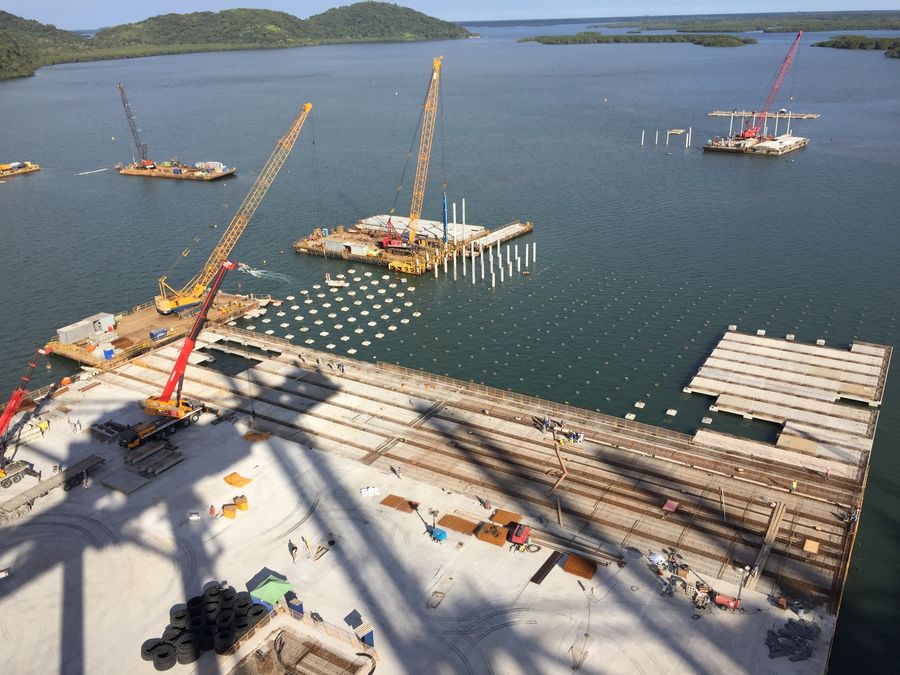
Although Brazil hasn’t officially joined the China-proposed Belt and Road Initiative (BRI), the Latin American country is already closely linked to the BRI. Chinese companies funded and developed many projects including the ongoing construction of the Sao Paulo Metro Line 2 that have borne fruit and driven local economic growth, created jobs, and improved local livelihoods in Brazil. What’s more, China’s southeast coastal city of Xiamen launched its first BRICS air cargo route to Sao Paulo of Brazil on February 10, 2023.
During Lula’s stay in Shanghai and Beijing, China and Brazil signed various bilateral cooperation agreements on trade and investment, digital economy, scientific and technological innovation, information and communications, poverty reduction, quarantine, space and other areas. Among the agreements, the development of a new earth observation satellite, CBERS-6 sent a clear signal of the two countries’ intentions to work closely together.
During their face-to-face talks on April 14, President Xi addressed Lula as “an old friend”. The two presidents have mapped out an even brighter future for the Sino-Brazilian partnership. Xi pointed out that as comprehensive strategic partners, China and Brazil share extensive common interests.
“China welcomes more high-quality products from Brazil into its market. China will actively explore greater synergy between its Belt and Road Initiative and Brazil’s reindustrialization strategy,” Xi said.
In this volatile and intertwined world, the China-Brazil partnership is essential for promoting economic growth, reducing poverty and promoting global peace. To sum up, it can be said that Lula’s visit to China gave both countries the opportunity to renew the solidity of the foundation of bilateral relations and the friendship between the two peoples. This is precisely what is needed now.
The article reflects the author’s opinions, and not necessarily the views of China Focus.