China and the Changing Global Economic Order
 Facebook
 Twitter
 Linkedin
 Google +

A better understanding of China’s modernization presents an insight into a changing world.
As?China has developed, so too has the global economy. For the past 200 years or so, the structure of the global economy was dominated first by the British empire, and more recently by the U.S. as the global economic hegemon. This system of center-and-peripheries is now decentering, with a diversification of networks and connections creating a multinodal system of value growth and circulation.
This decentering has been driven in no small part by the development of China over the past few decades. This process of Chinese economic development is punctuated by a series of national policy and important plenary sessions of the Central Committee of the Communist Party of China (CPC), the country’s ruling party, in which historic processes are evaluated and harnessed, and programmatic priorities for the future are outlined.
And so it was with the third plenary session of the 20th CPC Central Committee, which deliberated over further deepening reform comprehensively to advance Chinese modernization.
Understanding Chinese modernization
To understand this, it’s necessary to first examine China’s economic relationship with the rest of the world. China is now the major trading partner of over 140 nations. China’s economic growth is expected to contribute around 20 percent of global growth over the next five years, according to IMF forecasts. To put it plainly, China’s policy is of considerable importance to how the world develops.
Contrary to persistent claims from many mainstream Western commentators, China is likely to intensify its engagement with the rest of the world rather than reduce it. When the dual circulation concept was first introduced a few years ago, many such commentators misinterpreted it as pointing to a retreat to autarky. The new development pattern that China began to adopt in 2020 takes the domestic market as the mainstay while allowing domestic and foreign markets to reinforce each other. The introduction of the Made in China 2025 policy, together with talk of becoming more self-reliant in a number of key areas, has been viewed as signals of a retreat from opening up. These interpretations have missed the point.
China’s manufacturing sector is predominantly domestic-oriented. As manufacturing output grew over the past 25 years, so too did domestic consumption. Manufactured exports have never exceeded 20 percent of total output. During this time, Chinese manufacturing progressively moved up the value curve. Improvements in technical competency coupled with a growing cohort of scientific and technological capabilities supported the transition of Chinese manufacturing from simple to complex products.
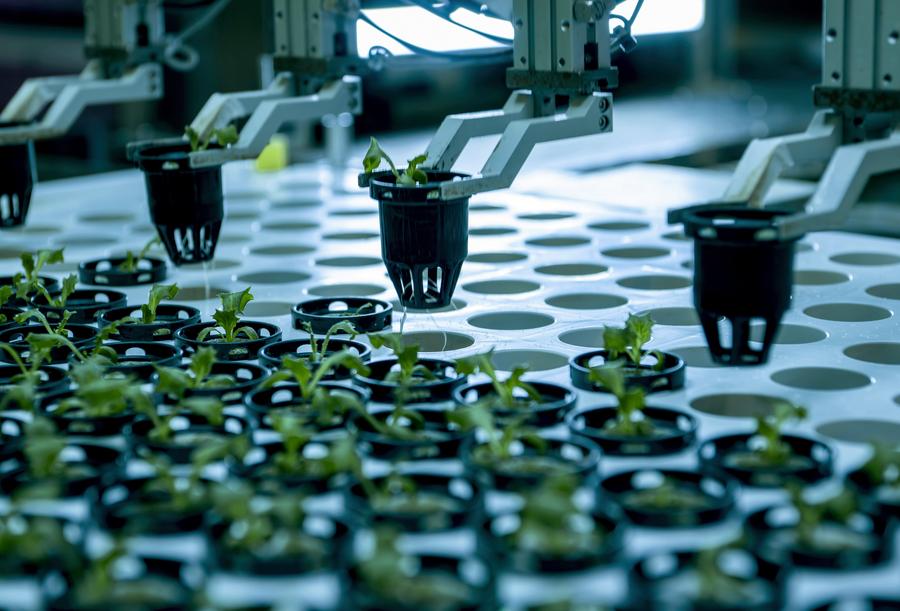
China is now entering a new phase, leveraging the capabilities developed over the past 25 years. This new phase is characterized by a number of important quantitative and qualitative transitions. Automation via robotics, high-speed data networks and increasingly rapid data processing via big-data analytics and artificial intelligence are beginning to transform factories, warehouses, ports and logistics.
In its pursuit of high-quality economic development, China now is fostering new quality productive forces based on local conditions. According to the Resoluton on Further Deepening Reform Comprehensively to Advance Chinese Modernization adopted at the third plenary session of the 20th CPC Central Committee on July 18, 2024, the country will improve the systems for promoting full integration between the real economy and the digital economy. “We will move faster to advance new industrialization, promote the growth and expansion of advanced manufacturing clusters, and make the manufacturing sector higher-end, smarter, and more eco-friendly.”
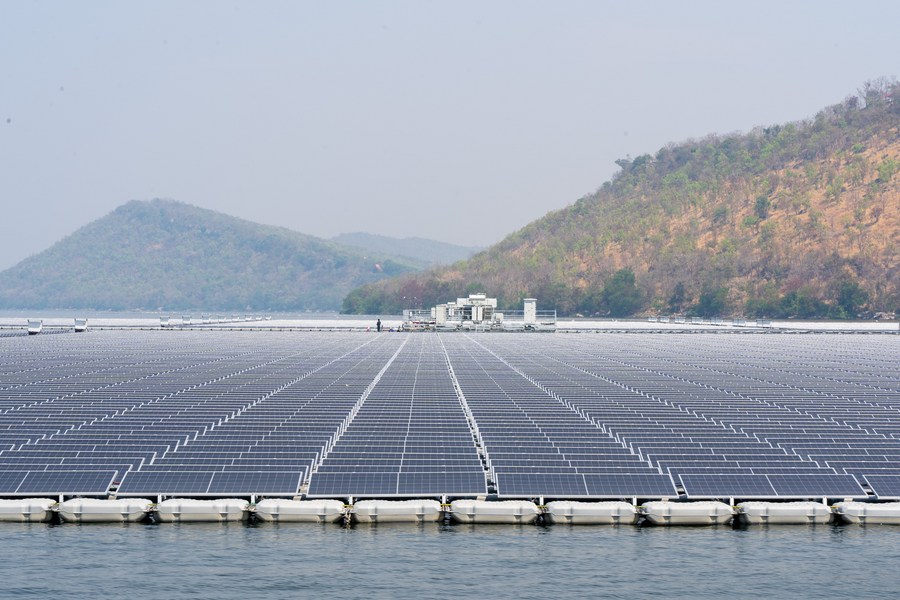
Automation is also energy-intensive. An energy transition is running parallel with production automation with renewable energy systems playing an increasingly important role in China’s overall energy production. This has two important implications. The shift to renewable energy is delivering improvements in air quality and it is driving a step change in the marginal cost of energy. Now, renewable energy generation combined with modern battery storage solutions is delivering energy at a marginal cost multiple times cheaper than traditional hydrocarbon-based energy systems.
Energy not only supports automation, but is also critical to the application of big-data and AI across the social and economic systems. Data centers are a major driver of new energy demand, and delivering least-cost energy solutions is critical if digitalization is to fulfill its potential across the economic and social sectors. Data not only enables optimized and timely decision-making and coordination of activities across key activity nodes, it also is central to improving the operations of payment systems and capital markets.
China’s leadership in e-commerce and online payment platforms over the past decade lays the foundations for the next generation of digitalized payments. The ongoing trial of the digital yuan and its incorporation into the official money supply will feed into smoother payments flows. Digitalization of payments has already led to measurable improvements in the circulation of money within the domestic economy. Ongoing reforms to create a unified national market will further contribute to improved system circulation, as regulatory harmonization across provinces reduces transaction frictions.
A new phase of development
Progressive digitization of supply chains can be expected to drive the next phase of transaction efficiency so as to complement productive efficiency realized through robots and automation. As supply chains digitize, payment systems – including the provision of supply chain finance – can be expected to become cheaper and faster.

The emergence of hi-tech manufacturing, digitalized payments and clean energy systems represents a trifecta of developments that are also transforming the structural composition of the social capital on the one hand, and the mode of interaction with other economies in the world on the other. Whereas much of the immediate economic growth during the 2010s was underpinned by urbanization and the formation of fixed capital by way of housing and urban and trans-urban network infrastructure, by late 2017 concerns were evident that excessive money capital flowing into the residential development sector could lead to China’s own Minsky moment – a sudden market collapse. President Xi Jinping signaled clearly that “housing is for living in, nor for speculation.”
Annual credit growth to the residential development sector exceeded 20 percent by 2017. It has now been brought back to less than 5 percent with credit growth channeled increasingly toward high technology and renewable energy sectors, driving the rapid development of battery storage technologies, renewable energy production systems (solar, wind and hydrogen in particular), robot applications and clean-energy transportation solutions. China’s emergence since 2020 as the global leader in new-energy vehicles (NEVs) is the result of investments that began in the early 2010s and which were spurred on as national resources transitioned out of property and into the intersection of smart and green.
The Resolution adopted at the third plenary session of the 20th CPC Central Committee also indicates the country’s commitment to increasing investment in the field. “We will establish a mechanism for ensuring funding increases for industries of the future.” China will also improve the policy and governance systems for promoting the development of strategic industries such as next-generation information technology, artificial intelligence, aviation and aerospace, new energy, new materials, high-end equipment, biomedicine, and quantum technology, and steer emerging industries toward sound and orderly development, according to the Resolution.
Chinese NEV manufacturers are now global leaders. While the EU and U.S. have expressed anxieties about the impact of Chinese-made NEVs, much of the remainder of the world embraces the opportunity of low-cost clean transportation solutions with enthusiasm. Not only are Chinese firms exporting leading transportation technologies, they are also exporting capital by way of new factories being established in a range of countries.
Low-cost renewable energy infrastructure is also impacting the availability of energy across the world. While much of China’s focus is its domestic growth requirements, it is also exporting the technologies and know-how. Economic development and GDP growth are tightly linked with energy consumption. The availability of low-cost energy reduces barriers to development for the Global South. Renewable energy systems also deliver energy sovereignty.
Over the past 25 years, China has emerged as a major trade surplus nation. For the majority of this period, this has been built on trade with the wealthy economies of the transatlantic world – the EU and the U.S. However, over the course of the past decade or so, the configuration of trade flows has gradually been transformed. This has been underpinned by rates of trade growth with nations involved with the Belt and Road Initiative (BRI) that have been greater than trade growth overall. Southeast Asia has been the principal cluster, though the east coast of Africa and sub-Saharan Africa have also been prominent. In recent years, China’s trade growth with Central Asian economies via the terrestrial Silk Road has grown at significantly above-average rates. Now, China trades more with the countries of the Global South than it does with the EU, U.S., and Japan combined.
Needed: a digital Westphalia
Digital infrastructure is the other major contribution of China’s economic development. For much of the last 30 years, global data flows have been enabled by a network of terrestrial, stellar, and submarine infrastructure that fed through server farms in Virginia. This exposed data flows to interception risks whereby the United States was able to “weaponize the global economy.” In response, Chinese enterprises have progressively expanded their capabilities in a host of open source technology environments, lending support for the development of what I have previously called an emergent Digital Westphalia. The Peace of Westphalia treaty ended decades of religious war in Europe in the 17th?century, and laid the foundation for the modern nation-state. A Digital Westphalia would create a global technological innovation eco-system respecting national sovereignty expectations, with open source at its core.
For centuries, the centralized model of hegemonic capital accumulation has priced most people and countries out through confected scarcity. Wealth has accumulated in the hands of an increasingly small number of firms. Against this, it now appears that China’s economic development model is presaging a period in which people and nations are “priced in” through abundance, where competitive markets are continually driving cost efficiencies with the benefits transferred by way of “buyer bonuses.”
As an emerging “great power,” China is finding its feet as an enabler as opposed to walking in the footsteps of history’s great colonial expropriators. The third plenum consolidated this path.
Warwick Powell?is adjunct professor at Queensland University of Technology and a senior fellow at Taihe Institute, China.