Deglobalization and China’s “Dual Circulation” Development Strategy
 Facebook
 Twitter
 Linkedin
 Google +

The dual circulation strategy means continued push for globalization by China but with increasing roles of domestic consumption on the demand side and of domestic innovations on the supply side.
On May 14 2020, the Chinese government announced a new development strategy – dual circulation. To a large extent, this is a passive reaction in response to the de-globalization move which has been hurting the world economy since the onset of the Sino-US trade tension in March 2018. This is the second time in the history of the People’s Republic era that a new development strategy was adopted. In the late 1970s and early 1980s, China adopted and implemented the well-known opening-up and reform strategy, leading to four decades of miracle growth. Before then, China was, to a large extent, closed to the outside world, so the Chinese economy was predominantly operating under “internal circulation” – production, distribution, marketing and consumption mostly took place within China.
A strategy to cope with world challenge?
The dual circulation development strategy places a significant emphasis on balances within the Chinese economy, particularly the balance between domestic supply and demand. Since early 1990s and particularly after China joined WTO in 2001, a high proportion of China’s output has been exported or circulated to the world market. In other words, China consumed less than what China produced, and the difference has been sold or circulated to US, Europe and so on. Without the “external circulation”, the Chinese economy would not have been able to grow so fast. Therefore, China has benefited a great deal from the opening-up strategy or from the external circulation.
Needless to say, external circulation requires permission of cross-border flows of trade and services. Globalization comes with many benefits, including more varieties of consumption for ordinary citizens through exchanges of produces with different economies all over the world. More importantly, globalization leads to productivity improvements through specialization of labour on a global scale so, for examples, the US can produce/sell more high-tech products, the EU can produce/sell more luxury brands, China can produce/sell more clothes, and so on. Such gains to consumers and producers prompted more and more countries to open their doors/borders. As a consequence, the current wave of globalization had been gaining momentum since 1970s and only came to a halt when the 2008 crisis broke up. Before 2008, international trade of commodities was growing at a rate twice the world GDP growth rate. After 2008, trade growth more than halved and there is no sign of recovery in the short or even medium run.
Why did the growth and welfare-enhancing globalization suffer a set-back and did not recover after more than ten years? The key lies in the distribution of benefits that had been accrued to commodity and particularly financial globalization. While it is true that globalization can yield overall gains, such gains had not been equally or fairly shared between different population groups. For example, those who own more capital are usually richer and they reaped almost all the gains from financial globalization by chasing the best investment opportunities world-wide. At the same time, the relatively poor working-class are likely to lose when capital that would have been invested locally in the absence of financial globalization went to other countries. After all, the poor largely rely on own labour for living and without investment or with reduced investment, there would be no or less employment opportunities for the working-class. The unequal distribution of globalization dividends is one of the most fundamental forces driving the anti-globalization move in the US, EU and elsewhere. The occupy wall-street campaign, the Brexit event and the voting-in of Trump are the best-known examples.
It must be pointed out that within a country there is a possibility to mitigate or resolve the distributional problem in the medium and even short run. One such re-distributional tool is taxation with fiscal transfers. However, the globalization dividends are perceived to be unfairly distributed among different countries and there exists no mechanism or institutions to deal with the formidable challenge of cross-country fiscal or social transfers. In fact, the research community had largely overlooked this distributional issue until recently and there is a long way between research and policy design and implementation.
Unfortunately, rather than attempting to resolve the distributional problem, politicians such as Trump turned to trade wars, which hurt all countries including the US. The poor in these countries would also suffer from slower growth, hiked prices of goods and services and less varieties of consumption.
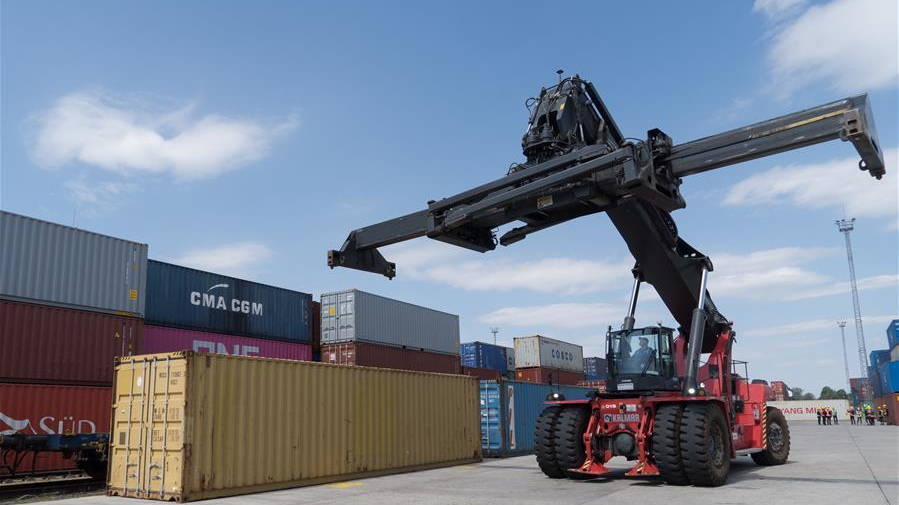
China’s continued push for globalization
In view of the unlikely quick recovery of the global market, China does not have other choices but to turn towards the domestic market for balancing production and consumption. In this sense, the dual circulation strategy represents a passive reaction. As a matter of fact, the new strategy is overdue as well, since the high reliance on foreign markets implies potential vulnerability or risks to the Chinese economy. This is why we have witnessed successive growth slow-downs in China after the global financial crisis, from more than 11 percent in 2010 to just over 6 percent in 2019. The once-off jump in growth recorded in 2010 was a result of the huge stimulus of 4 trillion Yuan RMB injected by China in 2009 in response to the 2008 crisis.
In short, the dual circulation strategy means continued push for globalization by China but with increasing roles of domestic consumption on the demand side and of domestic innovations on the supply side. Given the population and economy sizes of China plus her huge growth potential, China is expected to reaccelerate own growth as the new strategy is being implemented. Meanwhile, China will continue to support globalization and multilateralism thought, for example, the Belt and Road Initiative, the Asian Infrastructure Investment Bank (AIIB), regional free trade agreements and so on. Foreign investors and companies who decide to come to or stay back in China will benefit from more and more investment opportunities as well as more open policies the Chinese government is adopting, in addition to the world largest market which will continue to expand at a rate much faster than other markets.
There is no doubt that the world is standing at historical cross-road: continuing to globalize while making every effort to channel globalization dividends to the disadvantaged areas and groups, or engaging in division or fight along different ideologies or values leading to possible collapse of the current world order. In the end, the policy choice lies at the voters and political leaders but it is the ordinary citizens who will bear the consequences.
The author is distinguished professor and director of the Institute of World Economy, Fudan University. He was a director and head of Poverty and Inequality Group at the Asian Development Bank.
The article reflects the author’s opinions, and not necessarily the views of China Focus.