Kulkarni: Learning from CPC’s Success
 Facebook
 Twitter
 Linkedin
 Google +

This is not propaganda. As a frequent visitor to many parts of China, I have seen how the quality of life of common people has risen.
The Communist Party of China (CPC) marked its 100th anniversary on July 1, 2021. Among the thousands of celebratory events taking place is a ballet by the National Ballet of China depicting two famous Chinese myths. In one, a 90-year-old “foolish man” named Yugong achieves the impossible mission of removing two huge mountains to create a pathway for villagers to get connected and also to increase land under agriculture. In the other myth, Nuwa, a compassionate goddess, protects humanity from catastrophe by mending a hole in the sky caused by a war between the God of Water and the God of Fire.
These puranas or mythologies shouldn’t be dismissed as bunkum. They exist in all cultures and civilizations, and have inspired countless generations to accomplish incredible missions. India, like China, abounds with them. The Holy Ganga owes its puranic origin to King Bhagiratha, who is believed to have done tapasya (penance) for a thousand years to seek Shiva’s help in bringing the river from heaven to earth.
Even critics of communism will have to accept that what the People’s Republic of China has achieved since its founding in 1949 under the leadership of Mao Zedong, and especially since 1978, when Deng Xiaoping boldly redirected its progress with reform and opening up, is of mythic proportions. Emerging from a “century of humiliation” (1839-1949), in which foreign powers (mostly Western, but also Japan) attacked, fragmented and occupied China, and recovering from self-inflicted wounds, China has metaphorically moved mountains to march along the path of prosperity and all-round development.
At its birth, the People’s Republic of China was poor, ravaged by imperialism and civil wars. Today it is the world’s second-largest economy, and well on its way to toppling the United States from the top perch before 2030. With each passing year, it is gaining more strength to shape the new global order.
Its infrastructure is superior to that in Western countries. Consider this. High-Speed railway (speeds of over 250 km/h) started in Japan in 1965. Several European nations began soon after. China’s first high-speed railway was in 2007. By the end of 2020, its total length of 37,900 kilometers is more than two-thirds the combined high-speed railway in all the countries in the world. It has now prototyped a maglev train with speed of 600 km/h.

Two more startling examples show China’s epic achievements in the last four decades since China’s implementation of reform and opening up. According to the World Bank, more than 800 million people have been lifted out of absolute poverty since 1978 – the largest poverty reduction in such a short time in human history. When Xi Jinping was elected as general secretary of the CPC Central Committee in 2012, China still had around 100 million people living below the poverty line ($1.9 per person per day). He had vowed then that China would become completely poverty-free by the end of 2020. Last December, he declared the goal had been achieved. To meet this goal, CPC mobilized the energies of the entire Party, the entire economy, and the entire society. More than 3 million Party members were sent to rural and remote areas to implement an innovative “targeted poverty reduction” programme, which involved accurate identification of each poor family and each poor village, and implementation of a focused and sustained strategy to comprehensively improve their lives and livelihoods. Xi said, “Ensuring that poor people and poor areas will enter the moderately prosperous society together with the rest of the country is a solemn promise made by our Party.”
This is not propaganda. As a frequent visitor to many parts of China, I have seen how the quality of life of common people has risen. Chinese President Xi Jinping, who had experienced rural poverty first-hand when he was a young grassroots CPC worker, has visited more than 80 poor and backward areas for inspection of China’s version of Garibi Hatao campaign. In this context, is it unpatriotic to ask: How many poor villages has our own prime minister, who claimed he was once a poor chai-seller, visited in the last seven years?

Second example: in economic growth, national defense and technological prowess, China has been far more atmanirbhar (self-reliant) than India. When China first emerged as the “factory of the world” in 1990s, the usual comment in importing countries, including India, was “China maal, sasta maal, kharaab maal” (Chinese goods are cheap in cost, cheap in quality). But China, in the past 10 to 15 years, has ascended the quality ladder so fast in manufacturing and services that a major part of its exports are now hi-tech and value-for-money. It is now on its way to becoming a global leader in artificial intelligence and other technologies of the future.
China is far ahead of India in space research. In May 2021, it successfully landed a probe, Tianwen-1, on Mars with a rover. In June, it sent three astronauts for a three-month mission on a new space station. They performed spacewalks and carried out repairs and other scientific operations. Since 2003, China has sent 11 astronauts, including two women, into space. India has sent only one – Rakesh Sharma, who rode on a Soviet spacecraft way back in 1984. Four Indian astronauts are currently undergoing training in Russia for Gaganyaan, which is aimed to take off before 2022 to mark the 75th anniversary of India’s independence.
China impresses not only with its bullet trains, beautiful airports, skyscrapers and Made in China exports, it has some of the world’s best universities, museums, art galleries, public libraries and sports stadiums. China soon will have more foreign students studying in its universities than the U.S. It spends far more on culture than India. Comparable to India’s district headquarters, small Chinese cities have incomparably better concert halls, parks, community care centers and tourist attractions. No wonder, in 2019 (before the outbreak of the COVID-19 pandemic), China attracted 66 million foreign tourists, compared to India’s 18 million.
Talking about parks, here are a few stunning facts from a recent report in The New York Times. China spends huge annually for creating new public parks. It has achieved a five-fold increase in urban green spaces since 2001. Shanghai added 55 new parks last year, bringing the total number of parks in the city to 406, and it plans to build 600 more in the next five years. “The average Chinese city now rivals New York in publicly accessible green space per person. The latest 14th Five-Year Plan calls for building 1,000 large parks around the country to encourage physical fitness.” Let’s not pooh-pooh the importance of parks, green spaces and forests. They are as essential for human health and happiness as roti, kapda aur makaan (food, clothing and shelter).

Among the newly-built parks in Chinese cities are those near creeks and rivers, which were once highly polluted. For telling contrast, let’s look at the Mithi River in Mumbai, Shanghai’s sister city. It flows like an open drain, flanked by slums in the heart of India’s financial capital. In 2005, it flooded after a deluge that killed nearly 400 people. Eight years ago, my colleagues at the Observer Research Foundation in Mumbai did a comprehensive study showing how the Mithi and its environs can be transformed. The study was submitted to the government of Maharashtra, which appreciated it but, beyond cosmetics, has done little to change the ugly reality.
After the degradation of its environment caused by rapid economic growth, China has prioritized restoring its “blue skies, green mountains and clear rivers,” in line with President Xi’s call for transition from “industrial civilization” to “ecological civilization.” China’s renewables now account for 40 percent of its total installed capacity. (China’s renewables capacity is 850 GW; India’s 93 GW.) It is the world’s largest producer of renewable energy, with over double the generation in the U.S., its nearest competitor.
Most Indians, including Indian politicians and policymakers, are not paying adequate attention to China’s progress on multiple fronts, mainly because of the widespread anti-China sentiment in our country. But any visitor, especially those with some historical understanding of how poor and backward China was until decades ago, can see that common Chinese now eat better, reside in better habitat, have access to better education and healthcare, and live longer than the previous generation. They do have their own social problems, but they believe in the “Chinese Dream” and are confident that life for the future generations will be even better. The “Great Rejuvenation” of the Chinese nation is not an empty Party boast. It’s happening.
How did China achieve this? Our search for the answer must begin with the realization that no nation can make such spectacular progress in such a short time without the united, organized and well-directed efforts of its people. Lee Kuan Yew, Singapore’s visionary leader, once said, “Communism has failed in China, but the Communist Party of China has succeeded.” What he meant was that, in China, the organization that has strengthened people’s unity, provided strategic vision to the nation, and served as both a political leader and an all-encompassing governing mechanism is the CPC. China has evolved its own unique party-state system in which the party leads everything everywhere.

Let’s not pretend India’s system of governance is inherently superior. If proof of the pudding is in the eating, then the imperative to improve the pudding is no less in India’s multi-party system. Specifically, thought leaders in the Congress, BJP and other political parties in India should study with an open mind the factors that have enabled the CPC to perform far better than them. Here are five lessons they can profitably learn.
First: The time and mental energy of most Indian politicians, including those who are the best and brightest, is spent largely in fighting elections or in fighting their opponents in between elections. They do this not necessarily because all of them like it, but it is a compulsory systemic requirement imposed on them. Indeed, individual winnability and the ability to get one’s party elected in maximum number of constituencies become the criteria for a person’s rise in Indian politics. Naturally, money power, exploitation of religious and caste sentiments, giving impossibly populist promises to voters and manipulation of the media enter the toolkit of most political leaders and their parties.
When the political system itself thrives on division and constant internal confrontation, one can hardly expect people’s energies to be united, mobilized and channelized for “Bhageerath Prayatnas” to achieve history-changing tasks. Similarly, when our parties and leaders fritter away their energies, they shrink the space for all-party consensus and cooperation to tackle major challenges. It’s hardly surprising, therefore, that our political and governing establishments at the Centre and in states rarely set long-term goals in national development and people’s welfare, and pursue them with uninterrupted focus and commitment until the goals are reached. If China has set a better record in this regard – and none can deny it has – it is because the CPC has evolved a system that is conducive for party-wide, government-wide, economy-wide and nation-wide transformative programmes.
Second: The CPC has also evolved a system in which, by and large, highly competent, experienced and better-educated officials rise to the top, both at national and provincial levels. And they are held accountable for achieving strategic goals and targets the CPC sets from time to time. In general, the system sieves out the mediocre.
There is another crucial difference. In China, communist leaders do not rise to the top without having served in multiple provinces and without the experience of handling responsibilities in various subjects from grassroots upwards. As a result, they develop an all-China perspective, personality and competence. In India, with the minor exception of the pracharak system in the Rashtriya Swayamsevak Sangh, not many politicians develop a pan-India experience and understanding. The resultant Centre-state friction we often see in our country is a rarity in China.

The CPC’s top leadership is far more collegiate than is generally known. Xi is at its core, but others in the Political Bureau of the CPC Central Committee (25 members) and its Standing Committee (seven members) are not non-entities, as is largely the case with Modi’s cabinet or the BJP’s team of office-bearers. The CPC also values the guidance of its elders much more than is the case in India. Its most important leaders hold an annual chintan baithak (brainstorming meeting) for a week or two with their predecessors at Beidaihe, a seaside resort. This not only helps in consensus-building on major issues facing the nation, but also strengthens cohesion and continuity in the party from one generation to another.
This is rarely the case in India. The so-called Margdarshak Mandal in the BJP, established in 2014, was a way of silencing the party elders. It did not hold a single meeting. The practice of ministers in a BJP government consulting seniors in the Congress who once discharged important responsibilities – and vice versa – is simply non-existent in any institutionalized manner.
Here is a poser. On July 1, 2021, to celebrate the CPC’s centenary, Xi Jinping was seen at Tiananmen Square along with not only other six members of the Standing Committee of the Political Bureau of the CPC Central Committee but also top retired party leaders. On August 15, 2022, when India celebrates the 75th anniversary of her independence, will Narendra Modi give similar recognition on the ramparts of the Red Fort to his senior party colleagues, leaders of other major parties, the sitting and former presidents and vice presidents, and former prime ministers? Remember: The bhumi pujan for the construction of the new Parliament building in December 2020 was a Modi-only affair. He did not even invite President Ramnath Kovind, who is the Constitutional head of Indian Parliament, to grace the event.
Third: Contrary to the common perception in India, the CPC is not an inflexible and rigid entity. In keeping with ancient China’s philosophy of study and self-improvement, CPC itself has been changing with changing times. Shunning the ideological dogmatism of Marxism-Leninism, even Maoism, it is continuously experimenting with ways to overcome mistakes in developing “socialism with Chinese characteristics.” In this, it is increasingly seeking inspiration from ancient Chinese mythologies and philosophical-spiritual traditions. Learning from the collapse of the communist rule in the Soviet Union and its disintegration as a nation in 1991, it has focused on stability and economic reforms over political reforms in order to build a strong economy and raise its people’s living standards. Without this, external anti-communist forces would have conspired for a regime change in Beijing.
Here is another example of how the CPC is alive to the problems within. When the get-rich-quick craze led to corruption in the government, Xi warned that the communist rule in the country could end if the malaise was not addressed firmly. He launched a harsh anti-corruption drive, which led to the imprisonment of thousands – not only “flies” (low- and mid-level officials), but also “tigers” (many top party and military officials). In India, barring the communist parties (which have largely become irrelevant nationally), no other party has evolved any effective internal mechanism to punish their corrupt leaders and workers.

Fourth: The CPC, through its vast institutionalized system of party schools, attaches far greater importance to study and training of its officials than parties in any other country. Xi, who once headed the Central Party School, says, “Learning is the path to the inheritance of civilization, the ladder of life growth, the foundation for the consolidation of the CPC, and the key to the country’s prosperity.” Indeed, policy- and decision-making at the highest levels in CPC, and also in governments in Beijing and provinces, is far more consultative and knowledge-driven than in the BJP, Congress and other parties in India. The Political Bureau of the CPC Central Committee regularly conducts “study sessions” on specific subjects by inviting top-notch scholars. Universities, research institutes, think tanks and experts are valued far more in the Chinese system of governance than in ours. In contrast, political parties in India are largely impervious to seeking scholarly and professional advice from outside.
In my long and close association of 16 years with the Bharatiya Janata Party at the highest levels, I found that the so-called Kisan Morcha, Mahila Morcha, SC & ST Morcha, Minorities Morcha and the various cells and departments for doctors, lawyers, traders, small industrialists and others were mostly “naam ke vaaste” – to accommodate party functionaries seeking some position and recognition in the organization. The party’s own governments at the Centre or in states rarely seek, or receive, useful policy and monitoring inputs from them. The Congress does not perform any better in this regard.
Fifth: China could not have achieved what it has without steadfastly adhering to the path of socialism – essentially a system that puts “people first.” When Deng Xiaoping radically changed the course of the country’s economic growth after 1978, he pragmatically introduced reforms and opened up the economy to cooperation with Western countries. But this was done without abandoning the path and goal of “socialism with Chinese characteristics.” This catchphrase combines the broad ideals of equity and egalitarianism, and roots them in soil of Chinese people’s national pride. The CPC used its economic reforms to strengthen the nation and to continually improve the living conditions of the common people. Without this commitment and success, it would have lost the legitimacy to rule long ago.

In India, sadly, we have failed to evolve our own path of “socialism with Indian characteristics.” This, despite the fact that socialism not only remains a preambular principle in the Indian Constitution, but also finds a place in the constitutions of the Congress, BJP (yes, BJP, too) and several other parties. In reality, India’s political and intellectual class has shunned adherence to socialism a long time ago – without replacing it with anything better. Our developmental journey, therefore, is taking place without an inspirational strategic goal and a clear path to get there.
Furthermore, as we have seen in recent years, our sense of self-identity as a nation itself is sought to be fractured by the proponents of Hindutva. Whatever degree of people’s welfare that happens, is just largely a byproduct of the muddled, ad-hoc, divided and discontinuous efforts of our political system. For far too long, we Indians have neglected the need for fundamental and bold political and governance reforms, while keeping our democratic system intact, so that we can speedily bridge the gap between India’s enormous potential and her unsatisfactory performance.
It is, hence, useful and necessary for Indian politicians and people to study the CPC’s journey of 100 years. Not because China’s political system is perfect. Not because India should, or India can, copy the Chinese system of governance. The historical, social and cultural realities of our two great Asian nations are considerably different. Rather, studying the CPC’s accomplishments and failures will help us better understand where India’s strengths lie and, more importantly, what lessons we can learn from China to achieve similar “mountain-moving” and “sky-repairing” miracles.
In turn, the CPC too should study and adopt the many virtues in India’s developmental path. India and China are the only two countries in the world with a population of one billion-plus each, and each is gifted with profound civilizational wisdom. Therefore, with mutual learning and mutual cooperation, we both can improve and together strive to fulfill a common responsibility – creating a better world for all.
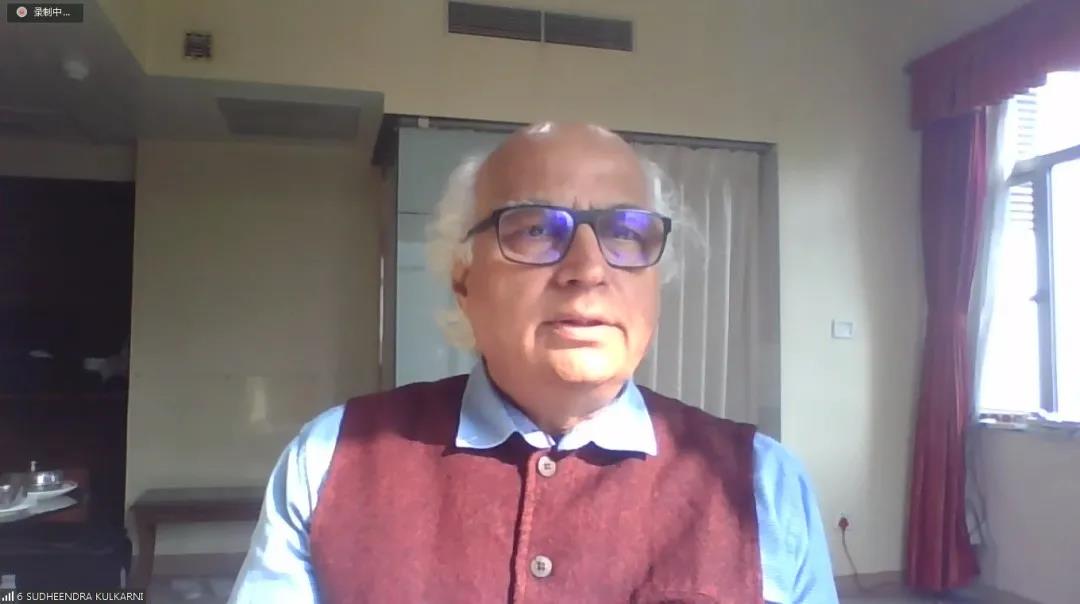
The author is the founder of the Forum for a New South Asia.